The gang’s all here. Two and a half months since I transplanted forty-some skinny vegetable plants with a hope and a prayer, our garden of fledglings is now something more akin to a rec room full of teenagers, gangly, rambunctious, fecund.
The petit gris de rennes orange-fleshed melons have commandeered the green bean trellises, vining back and forth, heaving with fruit.
The quartet of poblanos is bushy and already producing its hunter green jewels, hanging like tree ornaments. The aji dulces, key to sofrito, dangle like earrings as they ripen from lime green to fire engine red. And the tomatoes — oh the tomatoes. Two rows of four, standing at least four feet, tamed by their galvanized cages but undeterred, winding and bending their way into someone else’s spot. Always in need of a haircut. Always needing a talking to. But so hard working.
The smooth, egg-like Granadero, growing in clusters of five, have already delivered five pounds of fruit, and they are just getting started. They are an eager bunch and I expect the yield will end up being close to fifty pounds — a great choice for food pantry donations.
The four heirlooms, which I grow for my own kitchen, are more slow going and considered, as if they’re reading a good book while they mature. Each has its own personality and time table.
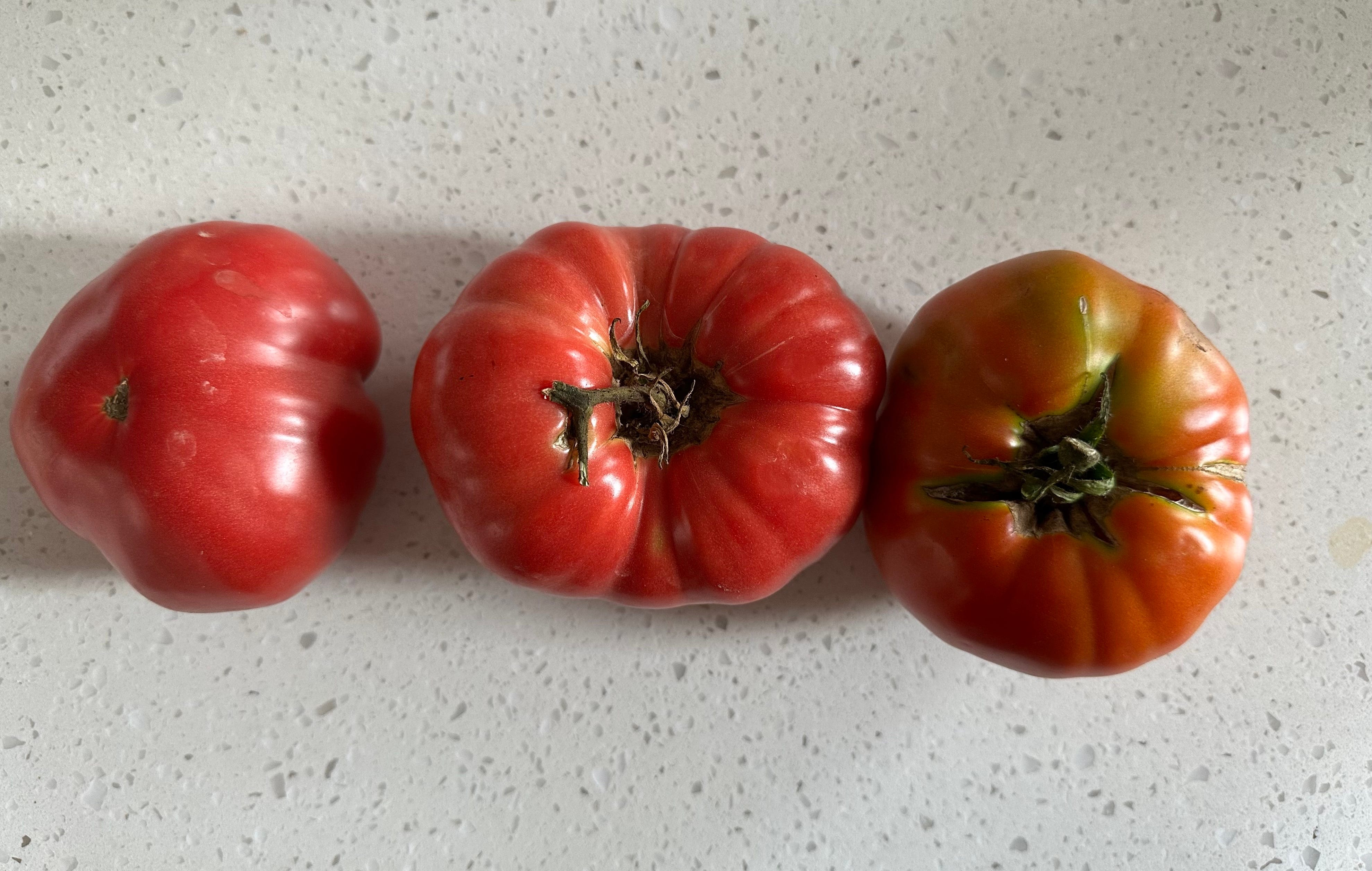
The German Johnson (GJ), one of the first to ripen, makes stout fruit with red-pink flesh and skin. The flesh is meaty and reminds me of watermelon. They can weigh as much as a pound or more; it’s equally good slapped between two slices of toast as it is wedged, salted, and drizzled with olive oil.
The Andrew Rahart, clocking in right after GJ, is as husky, or maybe even more so, sometimes weighing up to two pounds. Its skin and flesh has more orange/brick red undertones. Important to let it fully ripen on the window to curtail unpleasant fibrous innards. A good slicer.
The Jerusalem Red is the only oxheart in the bunch, as in fruit shaped like a human (or ox, so it’s been said) heart. Although it can be slow to fruit and produce unpredictable yields and sizes, it is one of my most favorite varieties for its flavor-flesh combo. Fewer seeds make way for dense flesh, delivering an exquisite balance of tart and sweet. Because of its non-circular shape, they’re best cut into wedges (or eaten like an apple).
Another late bloomer, the Paul Robeson is what happens when black and red and dark green pigments come together, both on the inside and outside. It’s a real looker. Beguiling. Juicy flesh, best wedged than sliced. Rarely weighing more than six ounces, this is a salad tomato, and really shows off its gorgeous coat when paired with other tomatoes.
From the not-so-great department, the tomatillos are barely hanging on, only one of the four actually making fruit, the others felled by disgusting yellow larvae that I’ve spent way too much time squishing. First time in several years of growing them that they failed to launch. Ah well.
But the zinnias are inching their way to the sky and flirting with anything and everything and give me a reason to believe that everything will be okay. That love will prevail. The bees pile on and have a big ole orgy and sometimes spend the night. The flowers sway in the wind and beam at me, their multicolored frocks a wink wink. Nothing to do but smile.
Thank goodness, she says, there is still half a summer to go.
xokod
P.S. What’s growing (or dying) in your yard? Please share in comments if you so please!
those tomatoes are beauties. farmer maud's crops not fairing as well. but summer in LA has just kicked in...🤞
Congratulations on everything. . . Now seeing the vivid colors. Beautiful, imaginative writing as always. I’m growing German Johnsons too. Had good luck with these whose name says it all, last year. Abundances appreciated. Big hugs… “klar”